Metal vs Silicone Chastity Cages: Which Is Better for You?
Quick answer: A silicone cage may have a more flexible shell, while a metal cage generally holds a more fixed shape. Neither material tells you which device will fit better. Compare the ring, internal dimensions, openings and removable parts before deciding. A soft shell can still have firm connections; a metal cage can be open-bar, covered or mesh.
Metal vs Silicone: Side-by-Side Comparison
On smaller screens, swipe the table sideways to compare both columns.
| Feature | Silicone | Metal |
|---|---|---|
| Material and construction | Check the shell, ring and lock separately; silicone is not a synonym for TPE or resin. | Confirm the stated metal or alloy and whether the body uses bars, mesh or a covered shell. |
| Weight | A material label is not a weight measurement; ask about the complete assembly. | Size, thickness, ring and lock affect weight. Use a figure for the selected configuration. |
| Flexibility and contact points | The shell may flex, while connections and locking parts remain firm. | A fixed body makes bar spacing, shell edges and ring geometry worth comparing. |
| Fit and ring options | Long/Short labels need matching measurements and an explanation of included rings. | Cage size, ring diameter and ring shape can be separate choices. |
| Cleaning access | Look at openings, joints and which parts separate for cleaning. | Open bars do not eliminate narrow areas around pins, mesh or locks. |
| Drying and maintenance | Follow device-specific care instructions and dry connections as well as the shell. | Inspect finish, joints and removable parts after cleaning and drying. |
| Durability | Inspect for tears, changes to the surface and damaged connections. | Inspect for rough edges, damaged coatings, loose joints or a sticking lock. |
| Everyday practicality | Compare assembled profile and removal steps rather than assuming flexibility means discretion. | Compare overall dimensions and lock position rather than assuming metal means bulky. |
What Makes Silicone Chastity Cages Different?
A flexible-looking shell may appeal if you want a different construction from metal bars or mesh. Check the actual material wording, all components and the size information for the selected product. Silicone, TPE and other polymers are not interchangeable labels. Locks and rings may use different materials from the cage body.
Look beyond the front opening. The entry edge, connector and base ring help determine where the assembled device makes contact. Ask which parts flex and which remain fixed. If a listing provides only Long and Short labels, find the corresponding measurements before ordering. A softer surface does not establish friction-free use or a suitable wear duration.
What Makes Metal Chastity Cages Different?
Metal cages may use open bars, short shells, perforated fronts or mesh. Some pages specify an alloy; others use a broader material label. Keep that distinction attached to the exact product. Neither metal construction nor a polished appearance proves a particular weight, cleaning outcome or suitable wear duration.
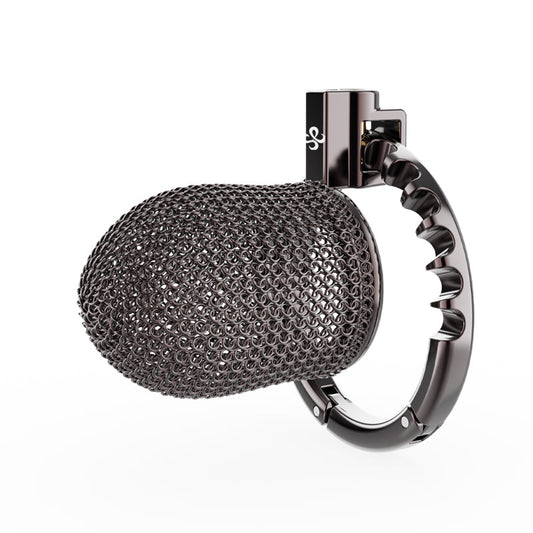
The 304 stainless steel example below identifies its alloy, while Armor Design provides a stainless steel mesh comparison. Mesh has more individual connections than a few separated bars; a covered shell has different access points again. Ring curvature, locking pins and the assembled angle can differ even when two devices share the same material description.
Comfort, Fit and Movement
Start with how to measure for a chastity cage. Record usable cage length, internal width, base-ring dimensions and the ring-to-cage gap using the product's own convention. Overall length and internal length are different measurements. A cage labelled Small in one range may not match another range's Small.
A flexible shell can still have a concentrated contact point at a firm connector. A rigid frame may have several distinct contact points along its supports. Compare these with the complete dimensions, not just the material. Photos also cannot establish visibility under clothing: overall profile, ring angle, lock placement and clothing all affect that question.
Cleaning and Maintenance
Cleaning access depends on where the openings are and whether the parts can be separated. A wide front opening does not necessarily expose the ring connection or the inside of a lock housing. Compare the disassembly steps and use the care instructions for every component.
After cleaning, allow the parts to dry fully and inspect seams, surface finish and locking connections. Do not infer compatibility with a cleanser or lubricant from a broad material label. A removable component can help access a surface, but it is useful only if the instructions explain how to remove and reassemble it. Neither material guarantees hygiene.
Which Material Makes More Sense for You?
- First purchase: compare clearly documented configurations in both materials. Use the first-cage buying guide to check dimensions, parts and release access.
- Inspection and removal: shortlist devices with usable images and clear disassembly instructions; softness does not make every connection removable.
- Sensitivity to weight: ask for the assembled weight of your selected cage, ring and lock, rather than comparing material stereotypes.
- More sizing choices: separate cage-size options from ring diameters, ring shapes and included accessories.
- Maintenance priorities: compare access around openings, seams and locks with the cleaning steps you can actually follow.
If your shortlist involves resin instead of silicone, use the separate Resin vs Metal comparison. For coverage and openings, compare open vs closed chastity cage designs.
Four Products Worth Comparing
These examples separate shell design, ring options and configuration choices. Check the current product page before selecting a variant.

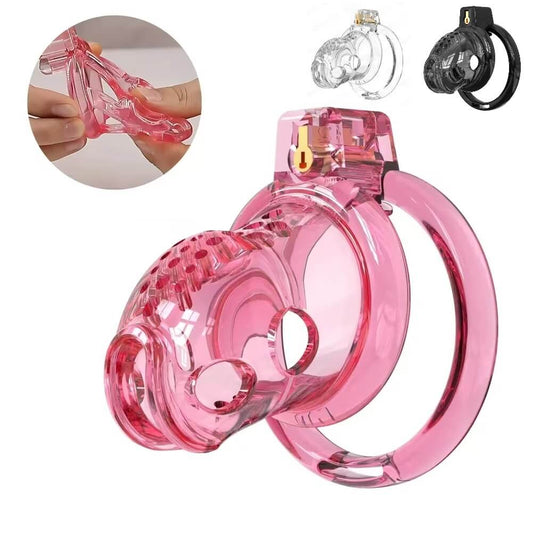
Exclusive New Model Silicone Chastity Cage
This silicone-labelled model offers Pink or Black and Long or Short cages. Its listing gives ring sizes of 36, 40, 50 and 55 mm, separate from the cage-length labels. Compare the shell openings and ring connection with the metal examples rather than assuming flexibility settles the fit. Check the corresponding size information and package details for your chosen configuration.
View Product →
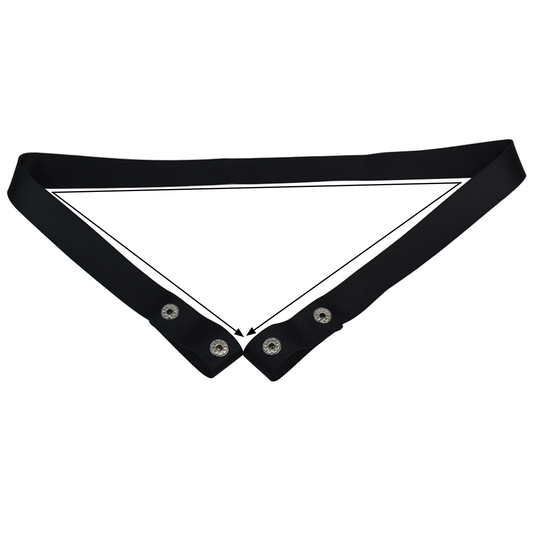
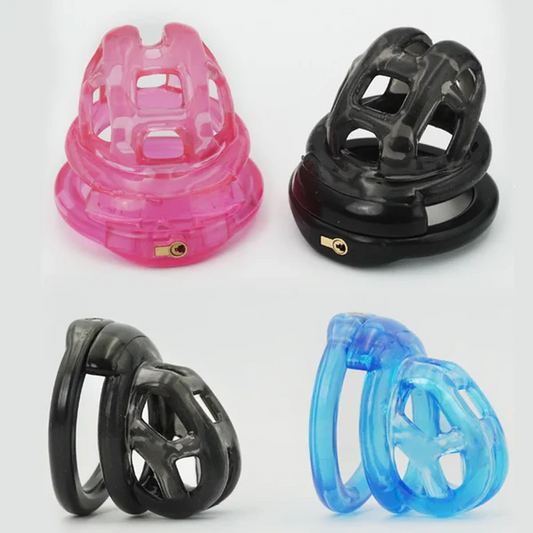
NEW Soft Chastity Cage Silicone
NEW Soft Chastity Cage Silicone offers Long or Short cages in Pink, Black, Blue and Watermelon Red, with or without a belt. The description lists four snap rings: 40, 45, 50 and 55 mm. Its shell and connection layout provide a second silicone comparison. Confirm which dimensions describe the selected cage and which accessories are included; colour and belt choice do not establish suitability.
View Product →
304 Stainless Steel Chastity Cage
This open-bar model lists 304 stainless steel and separates S, M and L cages from 40, 45, 50 and 55 mm ring choices. Arc or Round ring configurations are available with or without a belt. Use it to compare fixed bars with the silicone shells and mesh example. Check the size diagram and assembled ring geometry; the cage-size labels are not universal measurements.
View Product →
Armor Design Penis Chastity Cage
Armor Design provides a stainless steel mesh alternative to separated bars. The listing gives XS–XL lengths of 40, 50, 68, 90 and 110 mm, plus Arc or Round rings in four sizes. The mesh creates a different arrangement of openings and connections. Confirm how the listed diameters and weight apply to your selected assembly before comparing it with another model.
View Product →Frequently Asked Questions
Is a metal or silicone chastity cage better for beginners?
Neither material is automatically the better first choice. A useful starting point is a listing with clear dimensions, identifiable components and an accessible removal method. Compare the complete configuration and its care instructions. If an important measurement or component is unclear, resolve that question before choosing a material.
Is silicone easier to clean than stainless steel?
Not necessarily. The openings, seams, lock and removable parts determine what you can reach. A silicone shell with tight connections may need careful attention, while a metal mesh design can also have narrow spaces. Compare cleaning and drying instructions for the exact device, rather than judging the whole routine by material.
Which material is more flexible?
A silicone shell may flex more than a fixed metal body, but flexibility can vary across the assembled device. The ring, connector or locking component may behave differently from the shell. Ask which part is flexible and how it is designed; do not assume that a flexible body compensates for mismatched dimensions.
Does metal or silicone matter more than cage size?
Material and size answer different questions. Dimensions help you compare usable space and ring geometry; material helps identify construction and care requirements. A preferred material cannot correct an unsuitable configuration. Record cage length, internal width, ring size and connector details first, then compare the documented material and assembly.
Care, Consent and Removal Access
Use only in consensual adult situations. Follow the product instructions, keep a usable removal method available, and stop for pain, numbness, swelling, colour change, injury or difficulty urinating. Seek qualified medical help if symptoms persist or removal is not possible.
Do not choose either category as a guarantee of airport screening outcomes, invisibility or long-term comfort.