Resin vs Metal Chastity Cage: Which Material Should You Choose?
Resin and metal chastity cages can both look rigid in product photos, but the material label does not tell you how a specific device is built, how much it weighs, or whether its measurements match your needs. One resin cage may use a continuous shell, while another uses an openwork pattern. Metal products can be solid, barred, hinged, or made from flexible mesh.
The useful resin vs metal chastity cage decision starts with the exact product listing. Compare construction, internal dimensions, ring options, weight, openings, included parts, and care instructions before choosing.
Resin vs Metal: The Decision in Brief
| Buying factor | Resin cage | Metal cage |
|---|---|---|
| Construction | May be molded or printed; verify the listing | May use bars, a shell, hinges, or mesh |
| Weight | Do not assume lighter without a published figure | Compare the complete device weight, not material alone |
| Fit data | Check internal length, diameter, base ring, gap, angle, and selected variant | |
| Care | Follow the exact product and material instructions; do not assume identical cleaning methods | |
Resin and metal construction examples

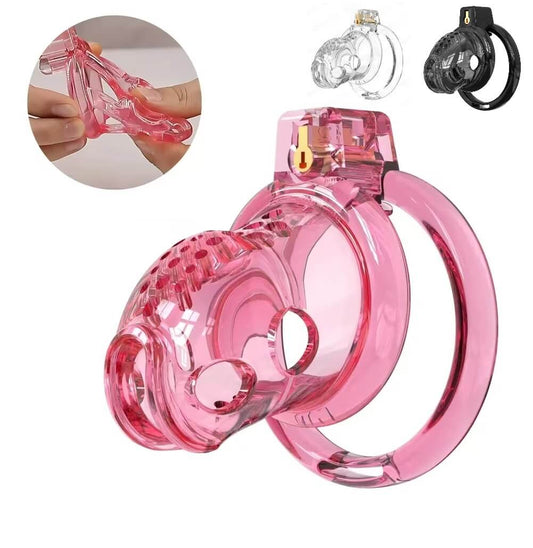
3D Armour Or Beehive Chastity Cage
The Armour / Beehive product lists nylon resin and Black or Pink choices. Its three-ring kit lists 41, 46 and 51 mm rings; the four-ring kit adds 57 mm. Compare the selected style and package with the metal examples, without treating a resin label as a weight or comfort guarantee.
View Product
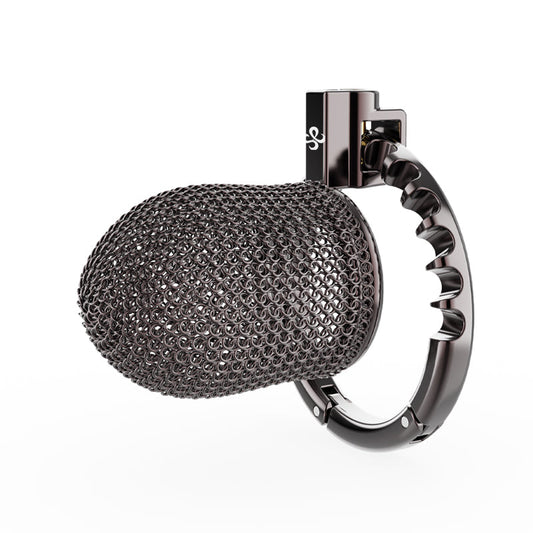
Armor Design Penis Chastity Cage
Armor Design provides a metal mesh example with XS–XL lengths listed as 40, 50, 68, 90 and 110 mm. Arc or Round rings and four ring sizes add further choices. Its listed 174 g weight is a reference figure; check which configuration it describes before making a weight comparison.
View Product
HT V3 The Steel Nub | Micro Chastity Cage
The Steel Nub gives a micro-size label a measurable reference: 25 mm internal tube length and 34 mm internal diameter. Its stated material is 316 stainless steel, and one 40, 45 or 50 mm ring is selected separately. Compare both dimensions rather than treating the short shell as a fit guarantee.
View ProductWhat the Material Label Cannot Tell You
“Resin” does not identify the exact formulation, manufacturing method, surface finish, or heat and cleaner compatibility. “Metal” does not identify the alloy, coating, weld quality, flexibility, or complete device weight. Inspect several images for seams, edges, joints, openings, and lock placement. If the listing uses only a broad label, treat the composition as incomplete information.
Practical Buying Factors
- Dimensions: compare the same internal length and diameter fields for the exact variant.
- Weight: use a published complete-device figure; do not rank materials by assumption.
- Components: confirm the cage, ring quantities, lock, keys, spacers, and replacement parts.
- Cleaning access: check openings and removable parts, then follow product-specific care instructions.
- Fit: use the chastity cage measurement guide before comparing variants.
What Might Rigid Construction Feel Like?
A fixed shape may make contact points and movement more noticeable, while mesh or openwork construction changes where contact occurs. The result depends on dimensions, ring, gap, finish, weight, and individual anatomy—not material alone. Stop using the device if you notice pain, numbness, swelling, unusual coldness, color change, injury, trouble urinating, or unusual discomfort. Keep emergency access available and use only between consenting adults.
Frequently Asked Questions
Is a resin chastity cage lighter than a metal cage?
Not automatically. Compare published weights for complete products or equivalent configurations. A material name alone cannot establish the finished device weight.
How can I tell what type of resin or metal a cage uses?
Look for precise material wording in the specifications. If the page says only resin or metal, ask the seller instead of assuming a formulation or alloy.
Are resin and metal chastity cages cleaned the same way?
Do not assume so. Cleaners, temperature limits, coatings, locks, seams, and removable parts vary. Follow the instructions for the exact product.
Which dimensions should I compare?
Compare internal length, internal diameter, base-ring size, ring-to-cage gap, angle, and overall profile for the selected variant.
Choose the Better-Documented Product
Choose resin when a verified resin product meets your measurements, structure, weight, and care requirements. Choose metal when its documented construction and specifications suit your needs. If either listing leaves material or fit data unclear, pause and ask. Browse the metal chastity cage collection and the general chastity cage collection, then compare this decision with our metal vs silicone guide.
Compare the material options in the resin cage collection, then use each product’s own specifications.