How Does a Chastity Device Work?
A chastity device can look simple in a product photo, yet it depends on several separate parts. The cage body, retention system, connector, gap, lock, and optional electronics each answer a different question.
This guide explains how a chastity device works at a component level. It is product education, not a universal fitting or wearing tutorial. Always follow the selected product’s instructions and treat missing specifications as missing rather than filling them in from a title or image.
How Does a Chastity Device Work?
| Component | What to verify |
|---|---|
| Cage or body | Internal dimensions, coverage, openings, construction, and cleaning access |
| Base ring or retention system | Fixed sizes, included rings, hinge, adjustment range, and shape |
| Connector and gap | How the body and ring align, plus any spacers or compatible parts |
| Lock and access | Keys, spare access, power, account, connection, and manual recovery |
Recommended Chastity Devices
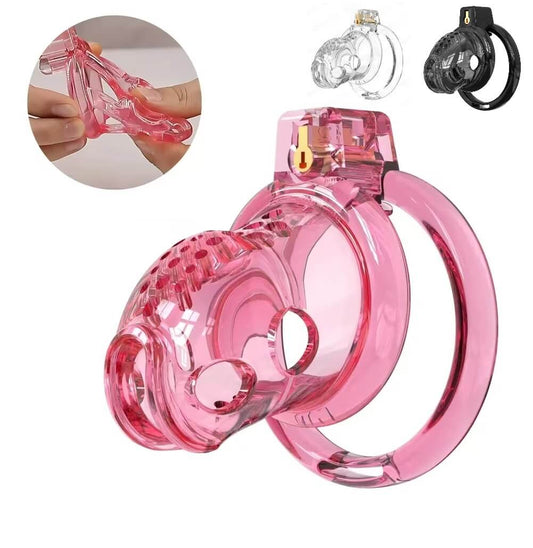
1. Exclusive New Model Silicone Chastity Cage — Separate Length and Ring Choices
The Exclusive New Model Silicone Chastity Cage illustrates a basic system with separate configuration decisions. Its current variants combine Pink or Black with Long or Short, while the page lists 36, 40, 50, and 55 mm ring sizes. All four variants are available for sale. It may suit a buyer who wants to examine a straightforward mechanical setup without app or charging dependencies. Its limitation is incomplete documentation: not every internal dimension, gap, lock detail, or care step is published, so the listing still requires questions before use.

2. New BDSM #55 Adjustable Male Chastity Cage — One Adjustable Ring System
The New BDSM #55 Adjustable Male Chastity Cage shows how one retention component may change size. The current page lists a 32–50 mm adjustable ring and six adjustment gears, and its single variant is available for sale. It may suit someone studying how a documented range replaces several separate ring pieces. The limitation is that the range explains only one part of the system; the page does not publish every cage dimension or the exact geometry at each setting, so adjustability cannot establish complete compatibility.

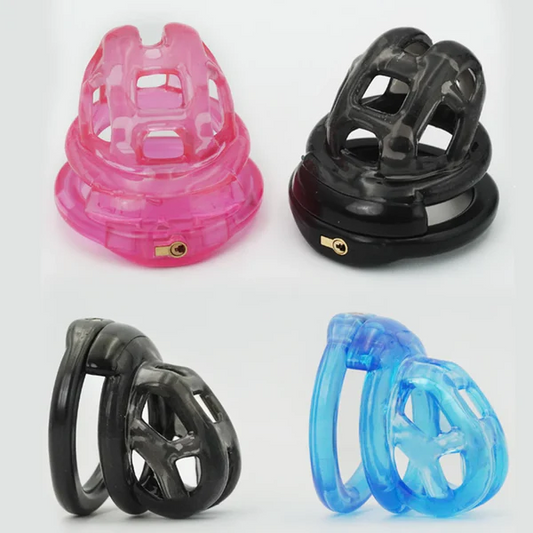
3. 3D Printing Chastity Cage With 4 Rings — Separate Retention Pieces
The 3D Printing Chastity Cage With 4 Rings demonstrates a multi-ring package. Its page currently lists one cage, four rings, and one Magic Lock, and says a PA ring is not included. Pink, White, and Black variants are available for sale. It may suit a buyer comparing separate ring pieces with one adjustable mechanism. Its limitation is missing ring-size evidence: the four diameters and full cage dimensions are not published, so the component count does not prove that any ring matches a particular measurement.

What Each Main Component Does
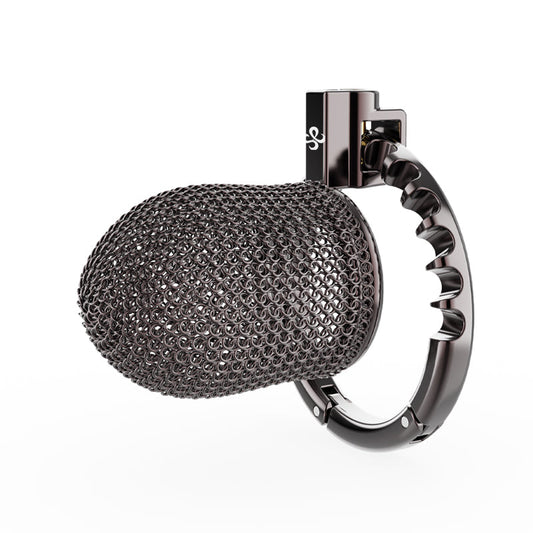
The cage or device body provides the main structure. Its internal length and diameter, overall profile, openings, surface, and lock position affect how the listing should be compared. Open and enclosed bodies create different inspection and cleaning questions; the open vs closed cage guide explains those tradeoffs.
The base ring or retention system connects with the body. It may be a fixed ring, one of several complete rings, a hinged piece, or an adjustable mechanism. Hinged describes how a ring opens; it does not necessarily make its diameter adjustable. Review the adjustable vs fixed ring comparison before treating the terms as interchangeable.
Connectors, spacers, and the ring-to-cage gap are separate listing fields. They determine how compatible parts align, but photographs do not establish the selected setup. Confirm what comes with the exact variant and do not combine parts unless the product instructions identify them as compatible.
How Mechanical and App-Controlled Systems Differ
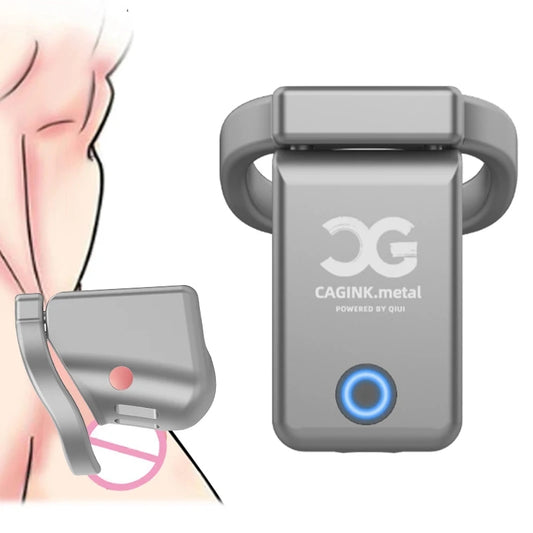
A mechanical system depends on its lock, key or keys, spare-access plan, compatible replacement parts, and an available removal method. A powered or app-controlled system adds a device version, supported app and operating system, account, permissions, connection, battery or charging method, updates, and manual recovery. A remote-control claim does not answer what happens when power, a phone, an account, or a connection is unavailable.
Extra features also add setup and maintenance work. Do not rely on an electronic or higher-risk function until its instructions, emergency access, and stop conditions have been reviewed.
Consent, Access, and Stop Conditions
Chastity devices are for consenting adults. Agree on who controls access, how check-ins work, and when the device must be removed. Keep a safe removal method available and begin gradually under the product’s instructions.
Stop use for pain, numbness, swelling, color change, unusual coldness, injury, difficulty urinating, or unusual discomfort. Do not force a lock, alter a retention part, or improvise around inaccessible removal. Seek qualified help when symptoms persist or safe removal is not possible.
Frequently Asked Questions
What parts make up a chastity cage?
Most listings describe a cage or body, a base ring or other retention system, connecting parts or a gap, and a locking method. Some add multiple rings, spacers, keys, chargers, apps, or other accessories.
How does a chastity cage lock work?
The exact mechanism varies between built-in cylinders, external padlocks, and electronic locks. Verify the key or power requirements, included parts, replacement route, and safe removal method for the selected product.
How does an app-controlled chastity device work?
It adds software and power dependencies to the physical device. Check the exact model, supported app and operating system, permissions, account, connection, charging, updates, and manual recovery before relying on remote access.
Do all chastity devices use a base ring?
No. Cage, belt, modular, and specialty constructions can use different retention systems. Start with the chastity cage collection, then verify the parts and instructions of each current listing.
Read the System, Not Just the Product Name
Before shortlisting a device, identify every physical component, access dependency, and missing specification. Use the measurement guide for the required fit fields, then ask when a listing leaves an essential part unexplained. A product is easier to evaluate when its complete system can be understood without guessing.