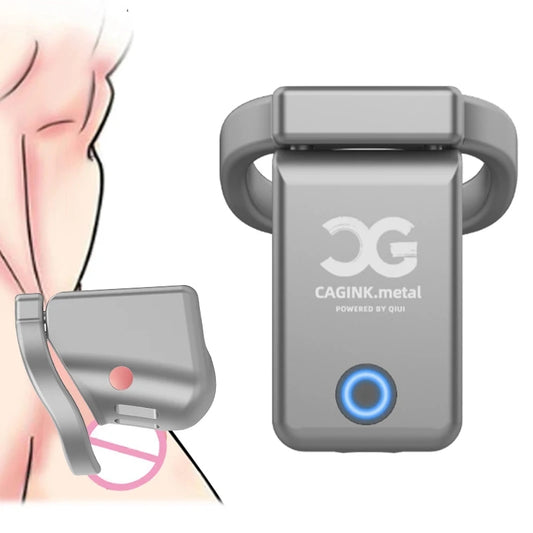
Why Does My Chastity Cage Keep Sliding Forward?
If your chastity cage keeps sliding forward, start by watching which part moves. A device that shifts as one unit points to a different problem from a cage that pulls forward while the base ring remains behind the body. That observation can save you from repeatedly buying smaller rings or tightening the wrong component.
Quick Diagnostic Checklist
- It happens mainly while walking: check cage length, weight distribution, ring rotation, and whether movement repeatedly pulls the cage away from the body.
- The whole device shifts: check base-ring size and shape, then confirm the assembled gap.
- Only the cage pulls forward: check the ring-to-cage connection, gap, spacers, pins, and whether the cage is longer than the wearer’s usual flaccid measurement.
- The base ring stays in place: do not assume a smaller ring is the answer; investigate cage geometry and assembly first.
- It shifts even while sitting: check for an overall mismatch rather than blaming walking or clothing.
Perform these observations during a brief, removable test. Do not pull forcefully on the locked device to test “security.”
Cause 1: The Base Ring Is Too Loose
A ring that is substantially too large may rotate or travel with the complete cage. Compare its internal diameter and geometry with the next available option, but do not jump straight to the smallest ring. A tighter ring that creates pinching, difficult removal, or circulation concerns is not a successful fix.
If you are between options, compare both sizes under the same short test conditions rather than assuming smaller is better. The existing adjustable versus fixed ring guide explains the trade-off between more increments and simpler hardware.
Cause 2: The Gap Is Wrong
The gap is the assembled distance between the base ring and cage. Too much space can permit shifting or create an unstable relationship between the two parts. Too little can create concentrated pressure. Check the manufacturer’s available spacers, posts, or settings and change only one variable at a time.
Photograph or record the exact configuration before changing it. Otherwise, a new ring and a new gap setting can mask which adjustment helped—or created a new problem.
Cause 3: Cage Length and Geometry Create Leverage
A cage that extends well beyond the wearer’s usual flaccid length may allow movement inside the tube and create more leverage as the body moves. A shorter cage is not automatically better: internal width, tip shape, angle, and openings still need to match.
Mark where the body sits inside the unlocked cage during an ordinary fitting check. If the tip never approaches the end while the base ring remains stable, excess internal length may be contributing. If the body reaches the end but the entire assembly travels forward, ring position, gap, or support is more likely. This simple distinction prevents a length problem from being “fixed” with an overly tight ring.
Use the comparison of short versus standard-length cages to check measurement endpoints. If the cage and ring both seem oversized, the guide to an oversized chastity cage helps separate the symptoms.
Cause 4: Weight Is Pulling the Assembly Forward
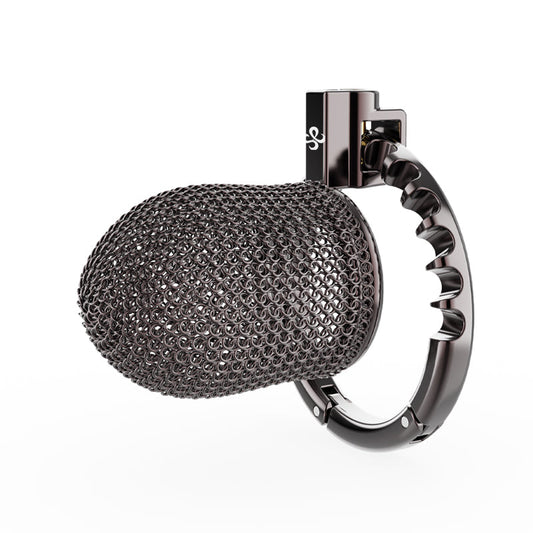
Heavier hardware or a lock positioned far from the body can amplify movement. Total grams matter, but balance matters too. A compact metal design may keep weight close; a lighter but longer cage may create more leverage. Compare the complete assembled setup, including ring and lock.
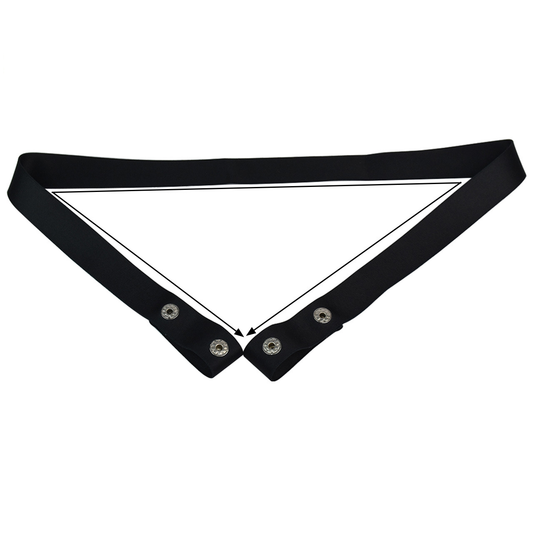
Clothing can also redirect the cage. Repeat the check with different underwear support before changing the device, but never use tight clothing to conceal pain or force an unsuitable angle.
Change One Variable and Retest
Use a sequence: verify assembly, observe the base ring, check the gap, then compare cage length and weight. Keep a short note of each configuration. If you change ring, spacer, and clothing together, you will not know which factor altered the movement. Stop once alignment is acceptable; the goal is not to eliminate every millimeter of natural motion.
Cause 5: Assembly or Component Mismatch
Confirm that the selected ring, cage, posts, spacers, and lock belong to the same product system and are installed in the correct order. A pin that is not fully seated or a spacer in the wrong position can imitate a sizing problem. Follow the current manual rather than a similar product’s video.
When a Different Design Makes More Sense
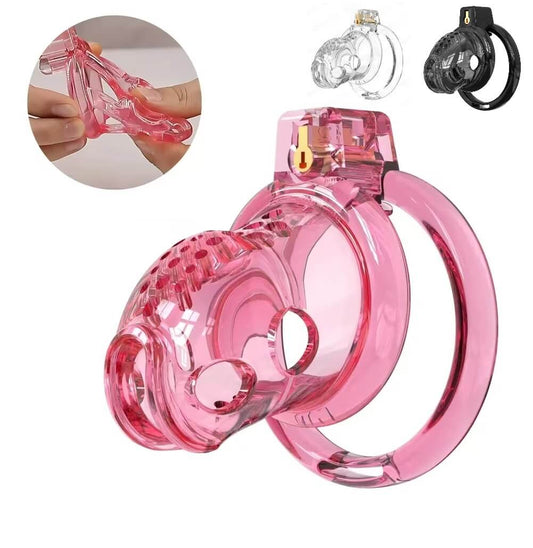
If fixed rings leave a large jump, the New BDSM #55 Adjustable Male Chastity Cage publishes a 32–50 mm range with six settings. More settings can help isolate ring fit, although every setting still needs a pressure and removal check.

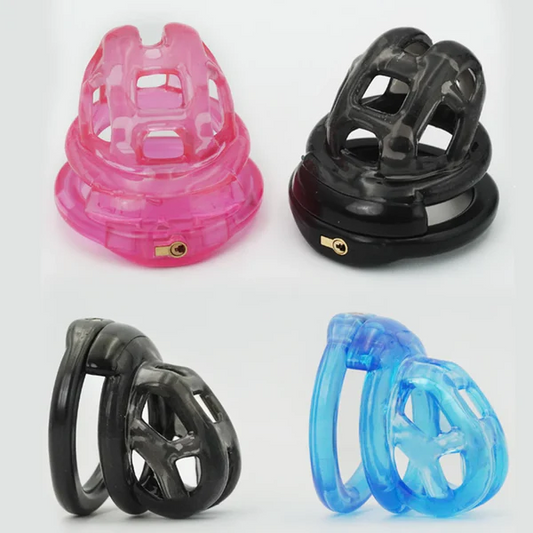
A multi-ring product such as the Exclusive New Model Silicone Chastity Cage lists four ring diameters and short or long cage variants. The 3D Printing Chastity Cage With 4 Rings includes four rings but does not currently publish their diameters in the text; request those numbers before treating it as a sizing solution.


Compare more options in the Adjustable Chastity Cages collection or Small Chastity Cages collection, depending on whether the unresolved variable is the ring or the cage body.
Stop Troubleshooting and Remove It When Needed
Remove the device promptly for pain, numbness, unusual color, swelling, coldness, broken skin, urinary difficulty, or escalating discomfort. If normal adjustments cannot keep the device aligned without concerning pressure, the current design may be unsuitable. Sliding is a fit signal to investigate, not a challenge to defeat by tightening everything.