Small vs Standard Chastity Cage: What to Compare
Shopping for a small vs standard chastity cage can be confusing because the labels do not follow one shared sizing system. “Small” may describe length, diameter, or footprint, while “standard” may simply be the middle variant in one product range.
Ignore the category label for a moment. Compare the same measurements on the exact variant you plan to order: cage length, internal diameter or width, base-ring size, connector or gap, and overall profile.
Small vs Standard Chastity Cage at a Glance
| Buying factor | Small-label option | Standard-label option |
|---|---|---|
| Label meaning | May describe length, diameter, or overall footprint | May mean the middle size in one seller’s range |
| Measurements to compare | Cage length, internal diameter, ring size, gap or connector, and lock footprint | |
| Possible ownership difference | Less internal space, depending on the actual dimensions | More room or a longer profile, but only if the figures show it |
| Main limitation | Neither label predicts fit, comfort, discretion, or safe wear time | |
Why “Small” and “Standard” Are Not Specifications
Small can refer to a 40 mm cage length, a narrow internal width, or the shortest option within a five-size family. Standard can mean a seller’s default selection without defining any average body measurement.
Start with the exact variant, not the collection name. Check whether the stated length is internal, cage-body, total, or front length. Then look for internal diameter, since two cages with similar lengths can provide different space. Base-ring size is another separate choice; a suitable ring does not prove that the cage body or connector gap will suit the same wearer.
The chastity cage measurement guide explains what to record before comparing listings. For more choices, browse the small chastity cage collection and the broader chastity cage collection, then compare only products with usable measurements.
Product examples for this comparison

HT V3 The Steel Nub | Micro Chastity Cage
The Steel Nub gives a micro-size label a measurable reference: 25 mm internal tube length and 34 mm internal diameter. Its stated material is 316 stainless steel, and one 40, 45 or 50 mm ring is selected separately. Compare both dimensions rather than treating the short shell as a fit guarantee.
View Product
Owl Flat Chastity Cage
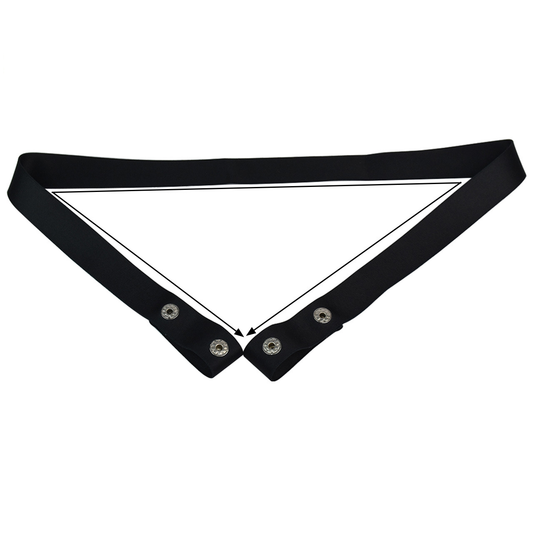
The engraved owl front offers a decorative alternative within the flat category. Its listing specifies 304 stainless steel, a 35 mm cage diameter and four ring sizes. The belt is optional, making this a useful example of why shoppers should check the configuration as well as the main product photograph.
View Product
Armor Design Penis Chastity Cage
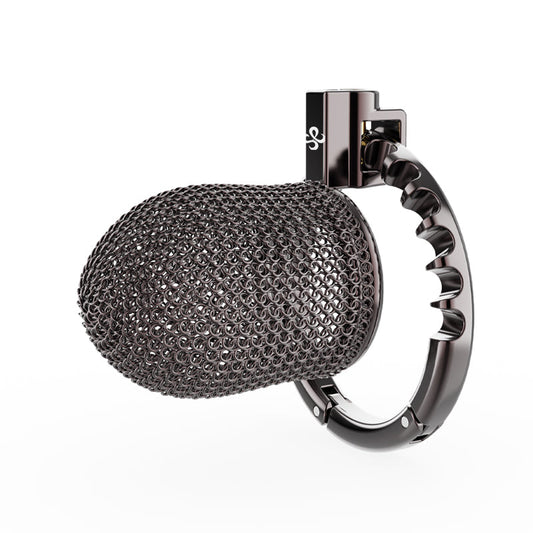
Armor Design provides a metal mesh example with XS–XL lengths listed as 40, 50, 68, 90 and 110 mm. Arc or Round rings and four ring sizes add further choices. Its listed 174 g weight is a reference figure; check which configuration it describes before making a weight comparison.
View ProductWhat Changes When the Size and Profile Change?
A shorter or narrower cage may change awareness, movement, and contact points, but smaller does not automatically mean more comfortable or discreet. A larger cage may provide more internal room, yet too much room can allow unwanted movement. Ring shape, lock position, finish, and connector geometry also matter.
Read the short vs long chastity cage comparison when cage length is your main decision. If you also need to compare access and coverage, the open vs closed chastity cage guide treats structure as a separate factor.
Advantages and Limitations
Small-label candidates
- Potential advantage: documented shorter or narrower dimensions may match some measured requirements.
- Limitation: an undefined small label can hide missing dimensions, and an incorrectly chosen smaller device may increase pressure or contact problems.
Standard-label candidates
- Potential advantage: documented larger dimensions may suit a different requirement or provide a useful comparison baseline.
- Limitation: standard is not universal and can still be too large, too small, or otherwise unsuitable.
Use chastity devices only in consensual adult situations, with removal access and clear check-in expectations. Stop use for pain, numbness, swelling, unusual coldness, color change, injury, difficulty urinating, or unusual discomfort. Seek qualified help if symptoms persist or safe removal is not possible.
Frequently Asked Questions
Is a small chastity cage more comfortable than a standard cage?
Not automatically. Comfort varies with cage length, internal width, ring size, gap, shape, finish, movement, and the wearer. A smaller label cannot replace a measurement-based fit check.
What does standard size mean on a chastity cage listing?
There is no universal standard size across all listings. Treat it as a seller-specific label and look for numerical dimensions for the exact variant.
Which measurements matter more than the size label?
Compare cage or internal length, internal diameter or width, base-ring diameter, connector or gap, and the overall profile including the lock. Confirm whether each figure uses the same measurement method before comparing products.
Can a cage be too large even if the ring fits?
Yes. The cage body and ring perform different jobs, so a suitable ring does not establish that the cage length, width, or gap is suitable. Pause if the product page does not provide enough information for both parts.
Choose by Measurements, Not the Label
Write down your requirements, compare the same dimension fields across the three current candidates, and remove any listing with critical gaps. Small or standard is only a starting category; the selected variant’s published measurements should make the final shortlist.
When the external profile is your main question, compare flat cage designs separately from the internal measurements.
To apply this comparison to a listing, check the definitions in the size and measurement guide.